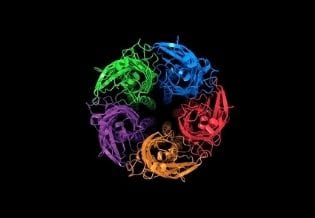
Submit Your Structural Biology Research
Join leading molecular biologists advancing our understanding of protein structure, macromolecular assemblies, and biomolecular mechanisms through rigorous peer review and open access publication.
Complete your submission in approximately 15 minutes
Structural Biology Research We Publish
The International Journal of Structural Biology specializes in molecular-level investigations of biological systems. We welcome submissions that advance our understanding of protein structure-function relationships, macromolecular complexes, membrane proteins, nucleic acid structures, and biomolecular dynamics through experimental and computational approaches.
Two Convenient Submission Methods
Choose the submission pathway that best fits your workflow. Both methods ensure your structural biology research receives expert evaluation from specialists in protein crystallography, cryo-electron microscopy, NMR spectroscopy, and computational structural biology.
ManuscriptZone Portal
Our comprehensive manuscript management system designed for complex structural biology submissions with multiple data files, coordinate sets, and supplementary materials.
- Auto-save functionality for multi-session submissions
- Real-time tracking of peer review progress
- Direct communication with structural biology editors
- Secure upload for PDB files, electron density maps, and large datasets
- Integrated revision management system
- Access to reviewer comments and editorial decisions
Quick Submission Form
Streamlined submission process ideal for straightforward structural biology manuscripts with standard file formats and minimal supplementary materials.
- No account registration required
- Single-page submission interface
- Fast upload for standard manuscript formats
- Immediate submission confirmation
- Perfect for short communications and brief reports
- Email notifications for status updates
Article Types for Structural Biology Research
We publish diverse article types that showcase structural biology discoveries, from high-resolution protein structures to computational predictions and methodological innovations. Each submission undergoes rigorous evaluation by experts in structural determination techniques and molecular biophysics.
Original Research Articles
Novel protein structures, macromolecular complex architectures, structure-function studies, and mechanistic insights from structural data.
Methods & Protocols
Novel crystallization techniques, cryo-EM sample preparation methods, NMR pulse sequences, computational modeling approaches, and structure determination workflows.
Short Communications
Preliminary structural findings, novel protein conformations, ligand-binding observations, and rapid reports of significant structural discoveries.
Structural Reviews
Comprehensive analyses of protein family structures, comparative structural studies, structure-based drug design reviews, and methodological advances in structural biology.
Technical Notes
Software tools for structure analysis, database resources, computational pipelines, and technical improvements to structural determination methods.
Structural Perspectives
Expert commentary on emerging structural biology trends, technological advances, and future directions in macromolecular structure determination.
Pre-Submission Checklist for Structural Biology Manuscripts
Ensure your structural biology submission meets our requirements before uploading. Complete manuscripts expedite the review process and reach expert structural biologists faster.
Word (.docx) or LaTeX format with all sections complete: abstract, introduction, methods, results, discussion, conclusions
High-resolution figures (300 DPI minimum), PDB coordinate files, electron density maps, NMR restraints, or computational models as appropriate
PDB accession codes obtained, EMDB entries submitted, BMRB depositions completed, or other relevant database submissions finalized
All authors listed with affiliations, ORCID IDs, corresponding author contact details, and contribution statements
Institutional approvals obtained (if applicable), biosafety protocols followed, competing interests declared, funding sources acknowledged
All citations properly formatted, DOIs included where available, structural biology databases referenced appropriately
Peer Review Timeline for Structural Biology Submissions
Transparency in our review process helps you plan manuscript revisions and publication timelines. Our structural biology editors and expert reviewers work efficiently to provide constructive feedback on your structural determinations and interpretations.
Submission & Initial Screening
Your structural biology manuscript is checked for completeness, structural data quality, and adherence to submission guidelines. Plagiarism screening performed.
3 daysEditor Assignment
A structural biology editor with expertise in your specific technique (crystallography, cryo-EM, NMR, or computational methods) is assigned to handle your manuscript.
2 daysExpert Peer Review
Minimum two reviewers with structural biology expertise evaluate your methodology, structural interpretations, data quality, and biological significance.
21 daysEditorial Decision
Based on reviewer feedback, the editor makes a decision: accept, minor revisions, major revisions, or reject. Detailed comments provided for improvements.
2 daysRevision & Re-review
Submit revised manuscript addressing reviewer comments. Re-evaluation by original reviewers ensures all concerns are adequately addressed.
14 daysFinal Acceptance & Production
Accepted manuscripts enter production for copyediting, typesetting, and final formatting. Proofs sent for author approval before publication.
10 daysOnline Publication
Your structural biology research is published online with immediate open access, DOI assignment, and indexing in major scientific databases.
ImmediateTotal Timeline: Approximately 60 Days from Submission to Publication
This timeline represents our average processing time for structural biology manuscripts. Fast-track review available for breakthrough structural discoveries and time-sensitive findings. Manuscripts requiring extensive revisions may take longer, but we work with authors to expedite the process while maintaining rigorous quality standards.
Why Structural Biologists Choose IJSB
Indexed in Major Databases
Your research gains worldwide visibility through indexing in Google Scholar, connecting it with the global scientific community.
Expert Structural Biology Reviewers
Manuscripts evaluated by specialists in X-ray crystallography, cryo-EM, NMR spectroscopy, and computational structural biology.
Fast Editorial Decisions
Average 21 days to first decision with transparent communication throughout the peer review process.
Immediate Open Access
Published structural biology research is freely accessible worldwide, maximizing citations and scientific impact.
COPE
Committed to ethical publishing standards through Committee on Publication Ethics membership and rigorous editorial policies.
APC Waivers Available
Financial support for eligible structural biology researchers from developing countries and unfunded studies.
Structural Data Requirements
High-quality structural biology publications require rigorous data standards. We follow community-established guidelines for structural data deposition and validation.
Mandatory Data Deposition
X-ray Crystallography: Atomic coordinates and structure factors must be deposited in the Protein Data Bank (PDB) prior to publication. PDB accession codes must be included in the manuscript.
Cryo-Electron Microscopy: EM maps deposited in EMDB and atomic models in PDB. Include EMDB and PDB accession codes in the manuscript.
NMR Spectroscopy: Chemical shifts, restraints, and coordinates deposited in BMRB and PDB. Provide BMRB and PDB accession codes.
Computational Models: Homology models and predictions should include template information, modeling parameters, and validation metrics. Deposition in ModelArchive encouraged.
Figure Quality Standards
Structural figures must be publication-quality with clear visualization of key features. Minimum 300 DPI resolution for raster images. Vector graphics (EPS, SVG) preferred for molecular representations. Include scale bars, labels, and legends that clearly identify structural elements. Stereo pairs or interactive 3D representations encouraged for complex structures.
Manuscript Preparation Guidelines
Well-prepared structural biology manuscripts expedite peer review and publication. Follow these discipline-specific guidelines for optimal presentation of your structural findings.
Abstract Requirements
Structural biology abstracts should concisely describe: (1) the biological system studied, (2) structural determination method used, (3) resolution achieved, (4) key structural features observed, and (5) functional or mechanistic implications. Maximum 300 words. Avoid abbreviations except for standard structural biology terms (PDB, RMSD, etc.).
Methods Section
Provide sufficient detail for reproducibility. Include: protein expression and purification protocols, crystallization or sample preparation conditions, data collection parameters (beamline, detector, wavelength for crystallography; microscope, camera, voltage for cryo-EM; spectrometer, temperature, pH for NMR), data processing software and parameters, structure determination and refinement procedures, model validation statistics, and computational methods with force fields and parameters.
Results Presentation
Present structural findings systematically: overall architecture, secondary structure elements, domain organization, active sites or functional regions, ligand binding modes, conformational states, and comparison with related structures. Include validation statistics (R-factors, Ramachandran plots, clash scores, FSC curves) in tables or supplementary materials.
Discussion Focus
Interpret structural findings in biological context: structure-function relationships, mechanistic insights, evolutionary implications, comparison with previous models or predictions, limitations of the structural data, and future directions. Avoid over-interpretation beyond what the structural data support.
Post-Submission Process
After submitting your structural biology manuscript, you'll receive regular updates throughout the editorial and peer review process.
Submission Confirmation
Immediate email confirmation with manuscript tracking number. Your submission enters our editorial management system where you can monitor progress in real-time through the ManuscriptZone portal.
Editorial Screening
Within 3 days, an editor reviews your manuscript for scope, structural data quality, and completeness. Manuscripts outside journal scope or with insufficient structural data are returned with guidance for improvement or alternative journals.
Peer Review Process
Expert structural biologists evaluate your methodology, data quality, structural interpretations, and biological significance. Reviewers assess: appropriateness of structural determination method, data collection and processing quality, model building and refinement procedures, validation statistics, clarity of structural presentation, and significance of findings.
Revision Guidance
If revisions are requested, you'll receive detailed reviewer comments and editor recommendations. Common revision requests include: additional validation analyses, improved figure quality, clarification of methods, additional structural comparisons, or reinterpretation of structural features. Revised manuscripts undergo re-review by original reviewers.
Acceptance and Production
Accepted manuscripts enter production within 2 days. Our production team handles copyediting, typesetting, and XML conversion. You'll receive proofs for final approval before publication. Structural data accession codes are verified during production.
Ready to Submit Your Structural Biology Research?
Join the growing community of structural biologists publishing breakthrough discoveries in protein structure, macromolecular assemblies, and biomolecular mechanisms. Our expert editors and reviewers are ready to evaluate your structural findings.
Begin Your Submission NowNeed assistance with the submission process? Our editorial team is here to help at [email protected]